

BLOG POST

Why Ceramic Tiles Remain a Widely Chosen Surface Solution

When it comes to surfacing materials that balance beauty, durability, and value, ceramic tiles are among the world’s most widely chosen options. Used for millennia across civilizations — from ancient Egypt to modern-day smart homes — they have proven their worth across climates, cultures, and construction types. Versatile, hygienic, low-maintenance, and available in an almost limitless range of designs, ceramic tiles remain a practical and popular choice for both residential and commercial spaces globally. 

At Regatta Tiles, we have been manufacturing and exporting premium-quality ceramic tiles from India for over 25 years. Our tiles grace residential homes, luxury hotels, corporate offices, and commercial spaces across more than 40 countries worldwide. This guide is your definitive resource for understanding ceramic tiles — what they are, how they’re made, which type suits your project, and how to make the smartest buying decision.

What Are Ceramic Tiles? A Clear Definition

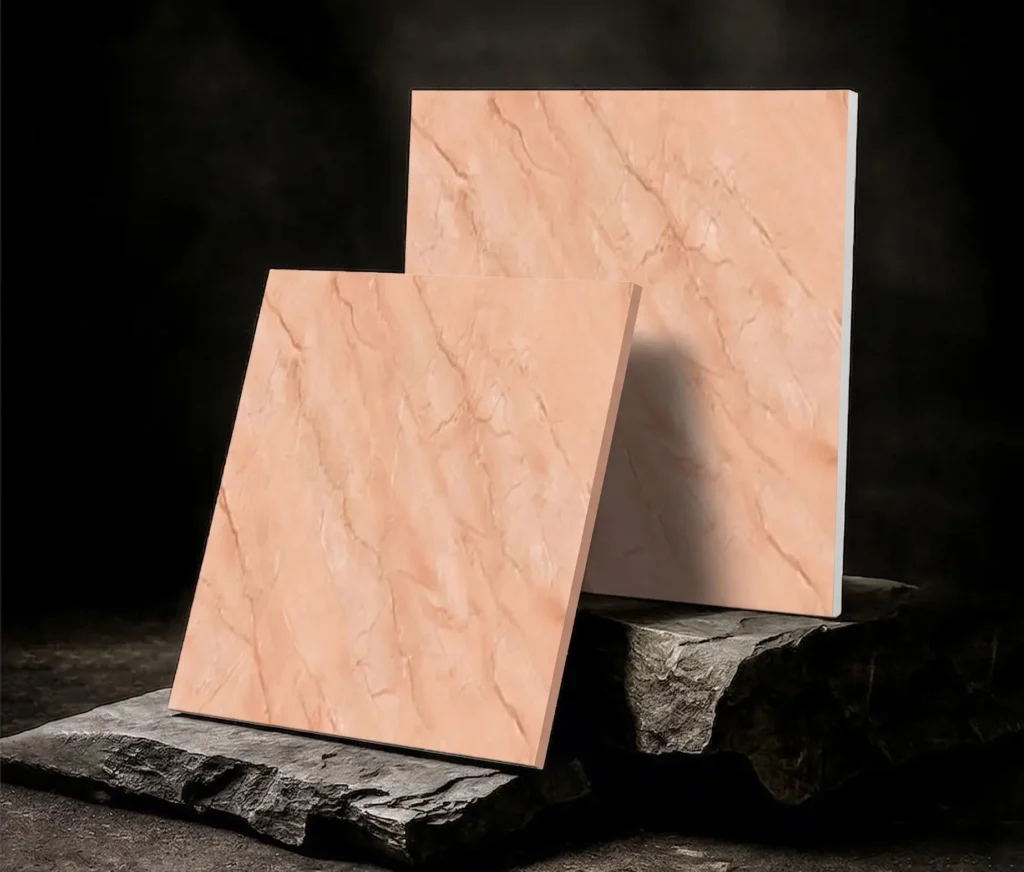
Ceramic Tiles

Ceramic tiles are flat, rigid surfacing units made from natural clay, minerals, and water that are shaped, dried, and fired at high temperatures in a kiln. The firing process — typically between 1,000°C and 1,200°C — transforms raw clay into a hard, durable material resistant to water, stains, scratches, and heat. Ceramic tiles are broadly categorized into two families:

Glazed Ceramic Tiles — coated with a glass-forming glaze before firing, giving a smooth, shiny, or matte surface finish 

Unglazed Ceramic Tiles — fired without a coating, producing a natural, textured surface

Both types offer distinct advantages depending on the application, traffic level, and design intent.

How Ceramic Tiles Are Made: The Regatta Tiles Process

Understanding the manufacturing process helps buyers appreciate why quality differences exist between tile brands.

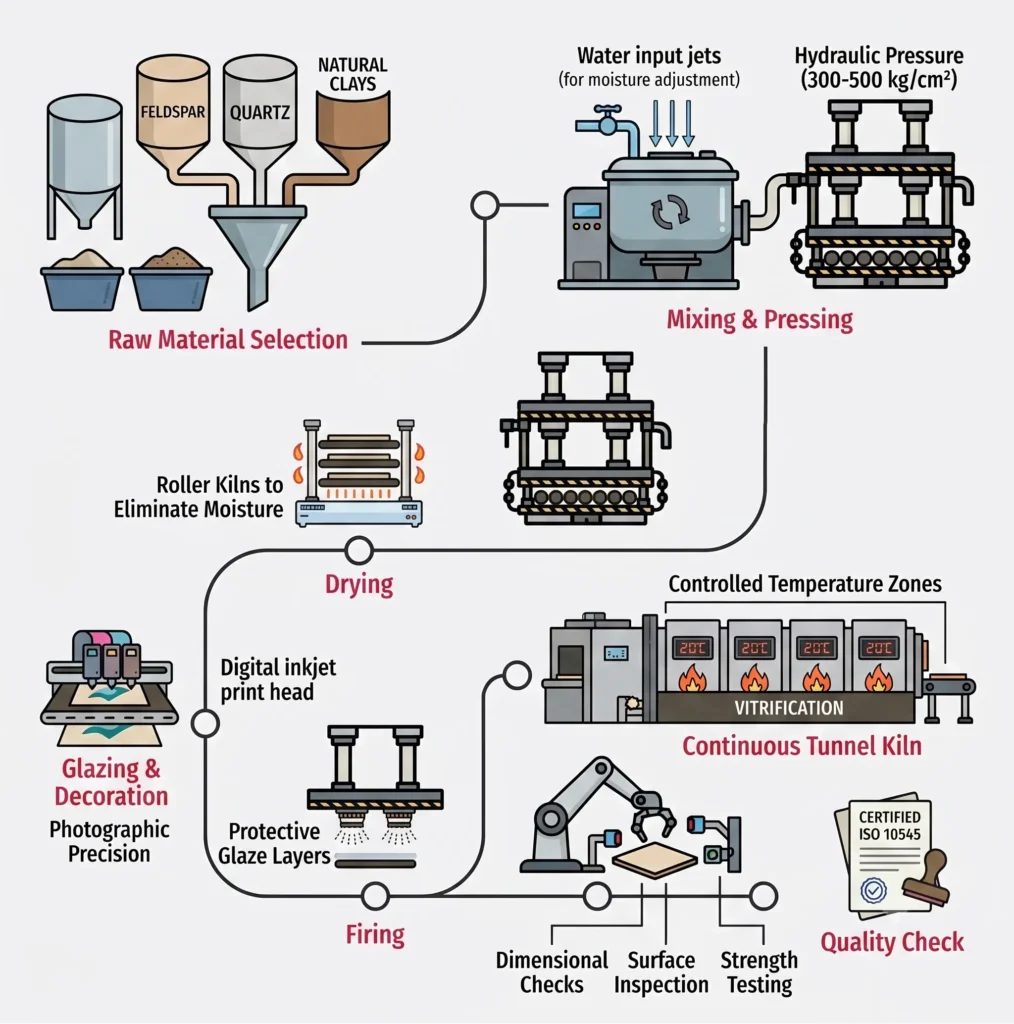
At Regatta Tiles, we follow a rigorous, ISO-certified process as described below:

Tiles Manufacturing

1. Raw Material Selection — We source high-grade feldspar, quartz, and natural clays from trusted Indian mineral reserves, ensuring consistent composition. 

2. Mixing & Pressing — Ingredients are precisely blended, moisture-adjusted, and pressed under hydraulic pressure (300–500 kg/cm²) to form dense, uniform tile bodies. 

3. Drying — Semi-formed tiles are dried in roller kilns to eliminate moisture before firing, reducing warpage and cracks. 

4. Glazing & Decoration — Digital inkjet printing technology applies designs with photographic precision onto the tile surface, followed by application of protective glaze layers. 

5. Firing — Tiles pass through a continuous tunnel kiln at controlled temperatures, vitrifying the body and fusing the glaze. 

6. Quality Check— Every tile batch undergoes dimensional checks, surface inspection, and strength testing per ISO 10545 international standards before dispatch.

This process ensures that each Regatta tile that leaves our facility in Gujarat, India, meets global benchmarks for flatness, strength, and finish.

Ceramic Tiles vs. Other Flooring Materials: A Practical Comparison

Feature

Ceramic Tiles

Marble

Hardwood

Vinyl

Durability

★★★★★

★★★★☆

★★★☆

★★★☆

Water Resistance

★★★★★

★★★☆☆

★★☆☆

★★★★

Maintenance

Low

Medium–High

High

Low

Design Variety

Unlimited

Limited

Limited

High

Eco-Friendliness

★★★★☆

★★★☆☆

★★☆☆

★★☆☆

Cost (INR/sq.ft.)

₹35–₹250

₹150–₹800+

₹120–₹600

₹40–₹180

Ceramic tiles perform strongly across most criteria — particularly in water-resistance, longevity, and cost-effectiveness over a 10–15 year horizon — making them a compelling choice for a wide range of applications. 

Key Specifications to Evaluate Before Buying Ceramic Tiles

Any individual buyer or B2B importer should evaluate tiles against the technical parameters as mentioned below: 

NABL

● Water Absorption Rate (ISO 10545-3): Less than 3% for floor tiles; less than 10% for wall tiles 

● PEI Rating (Abrasion Resistance): PEI III or higher for residential floors; PEI IV–V for commercial 

● Surface Hardness (Mohs Scale): Grade 4–7 for everyday floor use ● Dimensional Tolerance: ±0.5% variation in size; ±0.3% in flatness ● Chemical Resistance (ISO 10545-13): Grade A or B (unaffected by household chemicals) 

● Breaking Strength (ISO 10545-4): Minimum 1,000N for floor tiles

All our products carry test certificates from NABL-accredited laboratories & comply with exports standard requirements. 

Why Buy Ceramic Tiles from Regatta Tiles? Our Competitive Advantage

Since 1999, Regatta Tiles has built its reputation on four pillars: 

25+ Years of Manufacturing Excellence 

Our plant in Gujarat, India, operates with state-of-the-art Italian machinery and employs over 500 skilled artisans. Decades of craftsmanship mean we understand what global buyers need — precision, consistency, and reliability in every shipment. 

Global Export Reach 

Regatta Tiles exports to over 40 countries, including markets in the Middle East, Africa, Europe, Southeast Asia, and the Americas. We have experience in handling international logistics, documentation (CE, REACH, BIS), and trade compliance — so your shipment arrives on time, every time. 

In-house Design & Manufacturing 

Our in-house design & manufacturing unit continually refreshes the collection to keep pace with emerging global trends. From Japandi-inspired neutrals to bold Mediterranean patterns, our range covers every aesthetic one might be looking for. 

Competitive FOB Pricing 

With Regatta Tiles, you get highly competitive FOB prices, backed by efficient manufacturing and a streamlined supply chain. This allows our customers to source premium ceramic tiles at an excellent value. 

Sustainable Manufacturing 

We operate with an intent of causing no damage to our environment and for this we use zero liquid discharge (ZLD) systems, solar-powered kilns, and recycled water loops. Choosing Regatta Tiles means choosing a partner committed to environmental responsibility.


Ceramic Tiles for Different Rooms: Application Guide

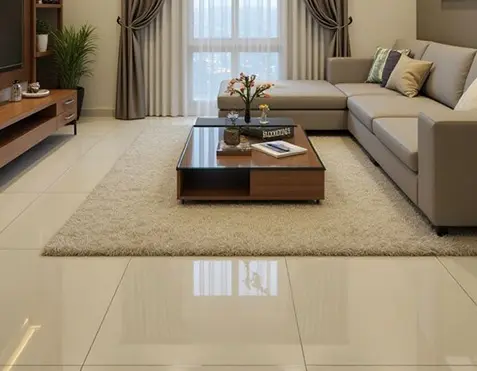
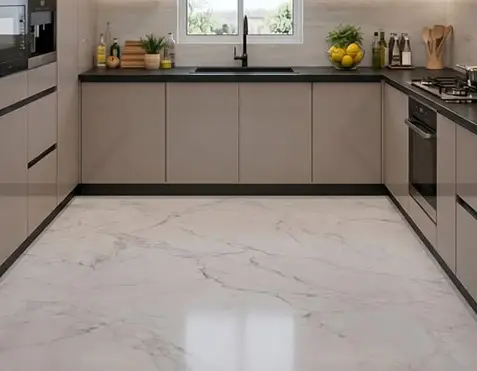
Living room Tiles

Living Room: Large-format ceramic tiles (800×800mm or 600×1200mm) with marble or concrete looks are currently trending worldwide. Rectified tiles ensure minimal grout joints for a perfect, seamless finish & fitting.

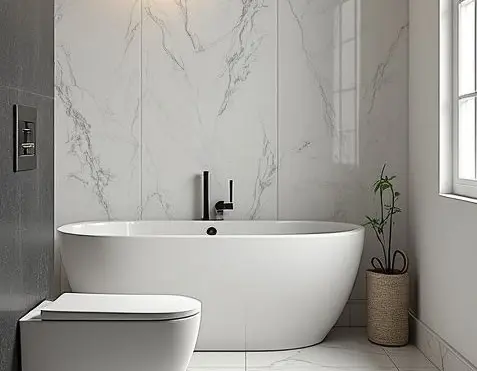
Tiles Bathroom

Bathroom: Choose ceramic wall tiles with a water absorption rate below 10% and floor tiles with an R10 anti-slip rating. Larger format tiles (600×300mm) create an illusion of space in compact bathrooms.

Kitchen Tiles

Kitchen: Choose glazed ceramic tiles with a matte finish (easier to clean fingerprints), a PEI rating of IV, and anti-bacterial glaze. Subway tiles for backsplashes add timeless style to the kitchen.

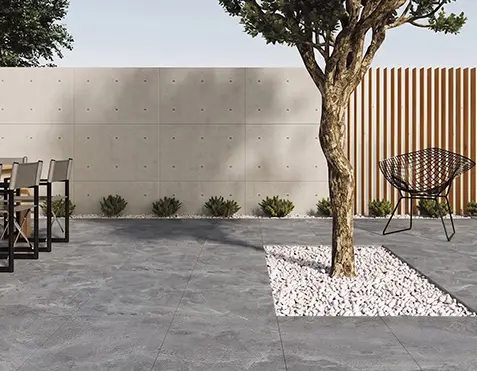
Outdoor Tiles

Outdoor Spaces: Use frost-resistant, unglazed ceramic tiles with a structured surface and R11 anti-slip rating for patios, balconies & pathways.

Commercial Spaces: For high-traffic areas, specify vitrified ceramic tiles with a breaking strength above 2,000N and a PEI rating of V.

How to Install Ceramic Tiles: Professional Tips

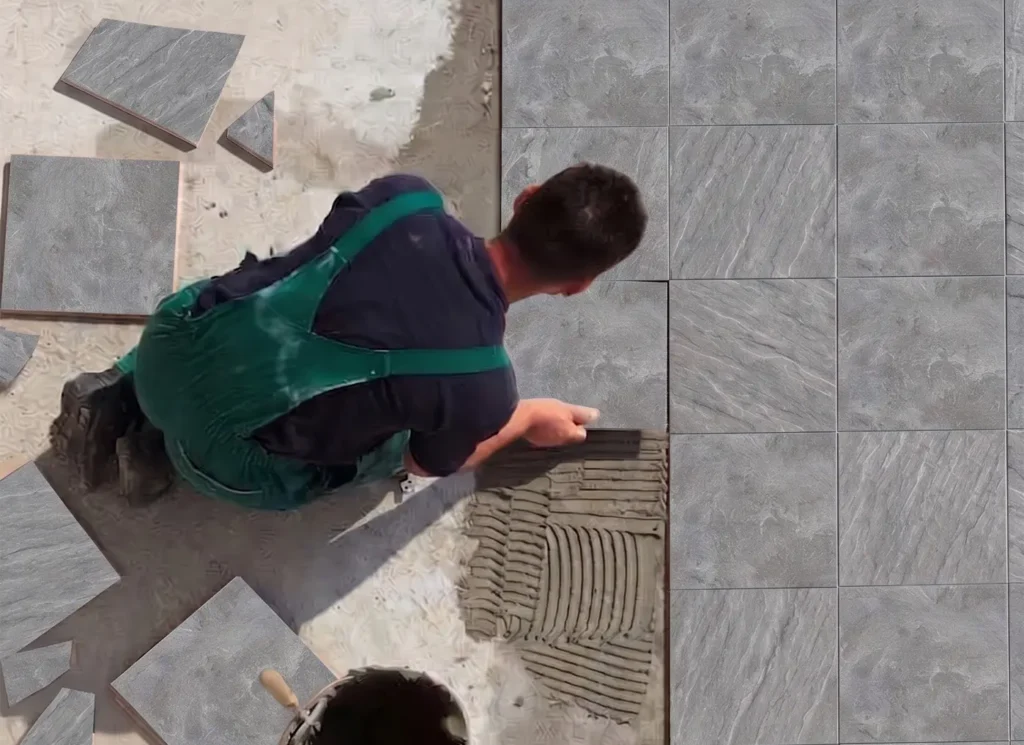
Tiles Installation

1. Surface Preparation — Ensure the substrate is level, clean, and free of dust. Use a laser level to mark reference lines. 

2. Adhesive Selection — Use polymer-modified tile adhesive (C2 grade per EN 12004) for best bond strength, especially in wet areas. 

3. Tile Placement — Work from the center of the room outward. Use tile spacers (1.5–3mm) for uniform grout joints. 

4. Grouting — Apply epoxy or cement grout 24 hours after the adhesive has cured. Buff with a damp sponge to remove haze. 

5. Sealing (Unglazed tiles only) — Apply a penetrating sealer to unglazed ceramic surfaces to prevent staining. 

6. Expansion Joints — Provide 6–10mm expansion joints at room perimeters and every 4–6 meters within the field to accommodate thermal movement.

Frequently Asked Questions (FAQ) About Ceramic Tiles

Q: What is the difference between ceramic and porcelain tiles? 

A: Porcelain tiles are a type of ceramic tile fired at higher temperatures, resulting in a water absorption rate below 0.5%. This makes them denser and more suitable for heavy commercial and outdoor use. Regular ceramic tiles absorb slightly more water but are lighter, easier to cut, and more cost-effective for residential interiors. 

Q: Are ceramic tiles suitable for underfloor heating systems? 

A: Yes. Ceramic tiles are excellent conductors of heat and work very well with radiant floor heating systems. Always use a flexible tile adhesive and provide adequate expansion joints when installing over heated substrates. 

Q: How long do ceramic tiles last? 

A: With proper installation and maintenance, high-quality ceramic tiles can last 50+ years. The glaze surface is scratch-resistant and does not fade with UV exposure, making tiles a genuinely long-term investment. 

Q: Can ceramic tiles be used in commercial kitchens? 

A: Yes, provided tiles carry appropriate ratings — PEI V for floors, R11 anti-slip rating, and Grade A chemical resistance. Regatta Tiles supplies certified tiles to hotel chains, restaurant groups, and institutional kitchens across India and abroad. 

Q: What is the minimum order quantity (MOQ) for export orders from Regatta Tiles? 

A: Our standard MOQ for export orders is 500 sq.m per design. We offer mixed container options for buyers wanting variety across multiple SKUs. Contact our export desk for a personalised quote. 

Q: Do Regatta Tiles have BIS certification? 

A: Yes. All Regatta Tiles products destined for the Indian market carry BIS certification. Export products comply with destination-market standards, including CE marking for Europe and SASO certification for Saudi Arabia.

Conclusion: Partner with India's Ceramic Tile Experts

Ceramic tiles are more than just a surface covering — they’re a practical, long-term investment in the beauty, hygiene, and value of a space, particularly well-suited to the climates and construction styles prevalent across South Asia, the Middle East, and beyond. Whether you’re a homeowner choosing tiles for your dream home, an interior designer sourcing materials for a luxury project, or a B2B importer building a profitable tile business, Regatta Tiles has the expertise, range, and global experience to be your trusted partner. 

With 25+ years of manufacturing experience, a proven export network spanning 40+ countries, and a commitment to quality in line with international standards, we bring India’s finest ceramic tiles to the world. 

Ready to explore our collection? 

🌐 Browse our full range at www.regattatiles.com

📩 Write to us at tiles@regattaexports.com 

📞 Call our export desk: +91-9958720044