
Vitrified Tiles vs. Marble vs. Ceramic: Which One Actually Makes Sense for Your Space?
Stand in any tile showroom for ten minutes, and you’ll hear the same three words on repeat: vitrified, marble, ceramic. Sales staff will tell you all three “look amazing” — which is technically true and completely useless as advice. What nobody tells you upfront is that these three materials behave very differently once furniture, foot traffic, and the occasional dropped pot get involved.
This isn’t a listicle designed to sell you one material over the other. It’s a breakdown of what each option is actually made of, where it holds up, where it fails, and which rooms it’s genuinely suited for — so you’re not the person googling “why is my marble floor stained” eight months after installation.
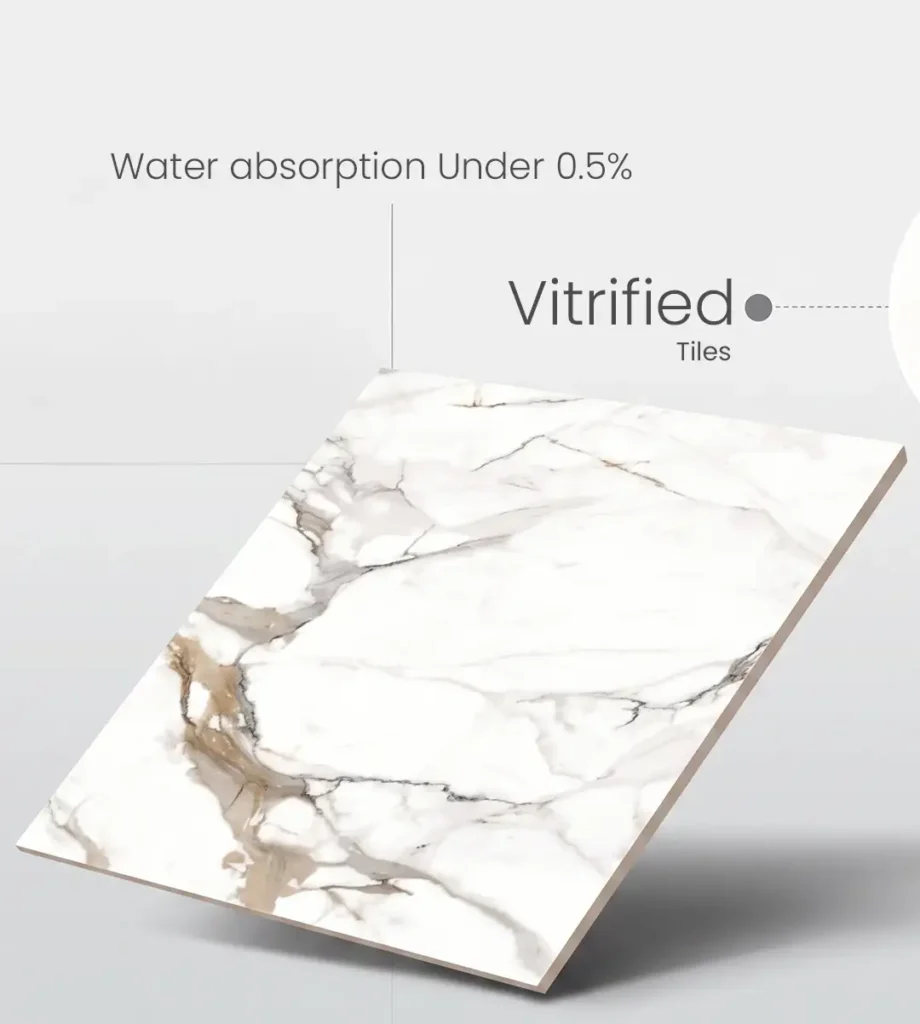
What Vitrified Tiles Actually Are
Vitrified tiles start as a mix of clay, silica, quartz, and feldspar, pressed under extreme pressure and then fired at temperatures well above 1,200°C. That firing process fuses — vitrifies — the particles into an almost glass-like, non-porous mass. The result is a tile with water absorption typically under 0.5%, sometimes closer to zero for fully vitrified or porcelain-grade variants.
Why does that number matter so much? Porosity is the whole story with flooring. A tile that doesn’t absorb water doesn’t stain from spilled turmeric, doesn’t grow mold in a bathroom corner, and doesn’t need re-sealing every couple of years. Vitrified tiles also come double-charged or digitally printed, which is how manufacturers replicate marble veining, wood grain, or stone texture on a surface that’s actually far more forgiving to live with.
Regatta’s vitrified tiles collection leans specifically into that marble-inspired category — the swirl and depth of natural stone, printed onto a tile that won’t etch if someone leaves a glass of wine on it overnight. It’s manufactured under ISO 9001:2015 quality processes, which mostly matter for consistency: batch-to-batch color matching and calibrated thickness, so a 600x600mm tile from one box lines up with the next.
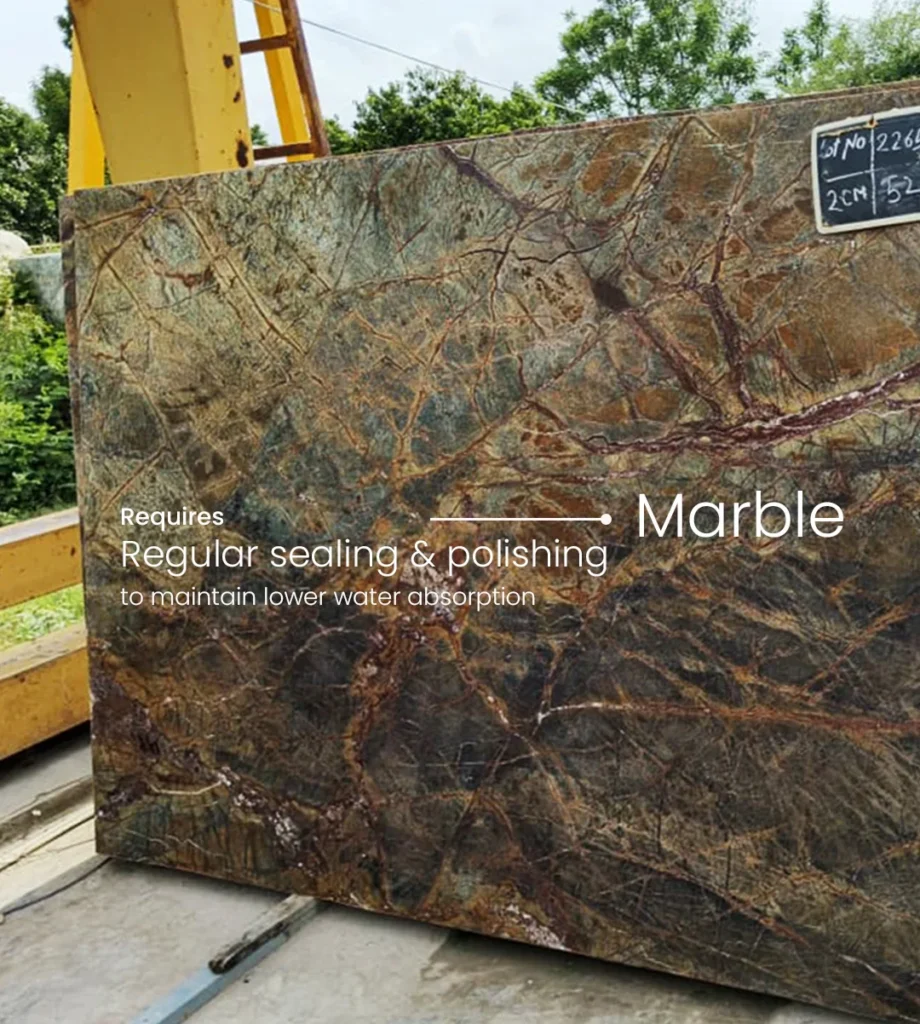
Where Marble Wins — and Where It Quietly Doesn't
Marble is the material people fall in love with in photographs. Every slab is genuinely one-of-a-kind, cut from stone that took millions of years to form, and there’s no printed tile that replicates the way light moves through real veining. If budget and maintenance aren’t a concern, marble in a formal living room or a hotel lobby is hard to beat visually.
Here’s the actual information that people don’t know: marble is calcium carbonate, which means it’s chemically reactive to acid. Lemon juice, vinegar, and even some cleaning products can etch the surface — a dull mark that polishing can hide but not fully remove. It’s also porous enough that it needs sealing on installation and, realistically, every 12–18 months after. Untreated, it stains. Structurally, it’s softer than granite or vitrified tile, so it scratches and chips more easily under heavy furniture or dropped cookware.
None of that makes marble a bad material. It makes it a material that demands upkeep in exchange for a look nothing else fully matches
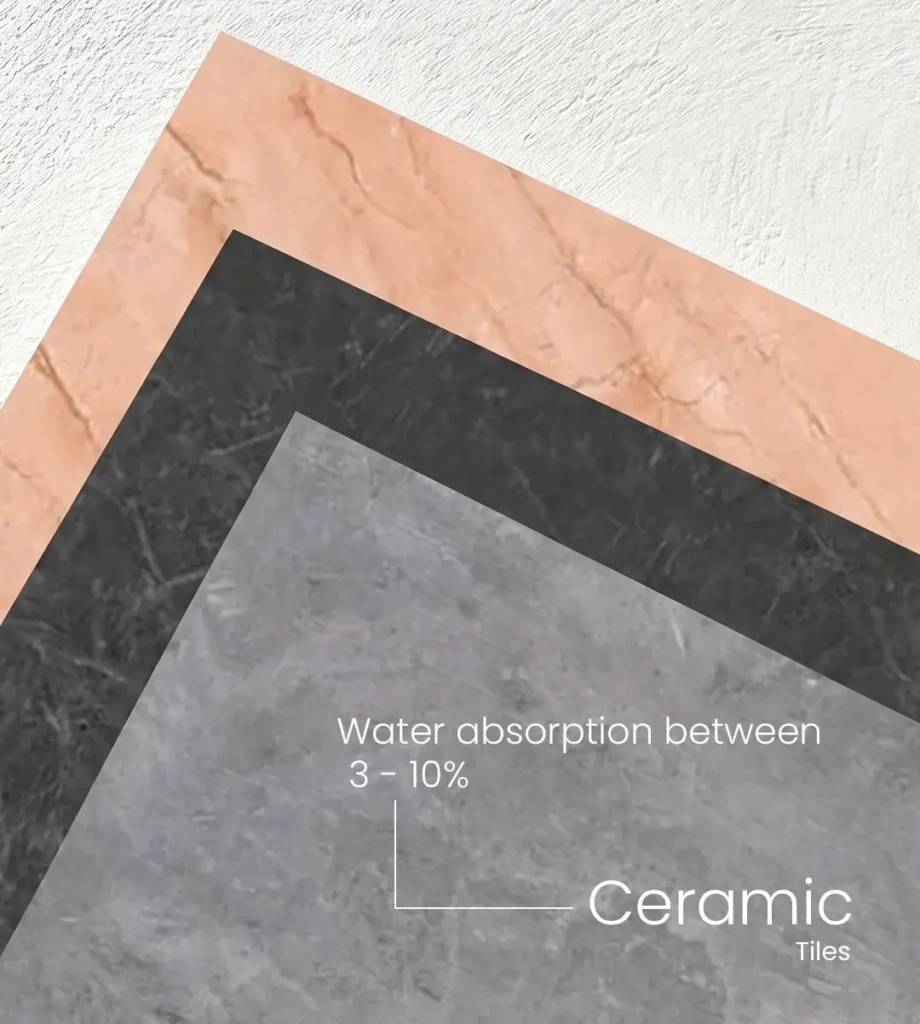
Ceramic Tiles: The Budget Contender
Ceramic tiles are also clay-based, but fired at lower temperatures and left more porous than vitrified tiles — usually with water absorption somewhere between 3% and 10%. That porosity is why ceramic tiles are almost always glazed: a thin, hard, colored coating baked onto the surface that gives you the design and most of the water resistance.
The catch with ceramic is that the glaze is only surface-deep. Chip a ceramic tile, and you’ll usually see a different-colored clay body underneath — something that essentially never happens with a fully vitrified tile, where the color runs through the material. Ceramic is also generally softer and thinner, which is fine for a low-traffic bathroom wall but starts to show wear in a busy kitchen or hallway within a few years.
Ceramic is mainly known for its affordability & installation flexibility. It’s usually the cheapest of the three per square foot, lighter to transport, and easier to cut for intricate layouts. For a rental property, a low-budget bathroom refresh, or wall cladding where foot traffic isn’t a factor, it still makes sense.
The Comparison, Side by Side
Property | Vitrified Tiles | Marble | Ceramic Tiles |
Water absorption | Under 0.5% | Porous — needs sealing | 3–10% |
Stain/acid resistance | High | Low — etches easily | Moderate (glaze only) |
Scratch/impact resistance | High | Moderate — softer stone | Low to moderate |
Maintenance | Minimal, no sealing | Regular sealing & polishing | Low, but glaze can wear |
Uniqueness | Consistent, replicable pattern | Every slab unique | Consistent |
Typical cost | Mid-range | Highest | Lowest |
Best suited for | Kitchens, high-traffic floors, bathrooms | Formal spaces, low-traffic luxury areas | Walls, low-traffic areas, tight budgets |
So Which One Should You Actually Pick?
It depends on the room, and honestly, on how much maintenance you’re willing to sign up for.
If you’re flooring a kitchen, hallway, or anywhere that sees daily foot traffic and the occasional spill, vitrified tiles are the practical choice — you get the marble look without babysitting the surface. Bathrooms are the same story: the near-zero water absorption matters more there than almost anywhere else in the house.
For those looking for an option for a living room, a lobby, or a space that’s less prone to daily wear, marble remains a good fit. Just remember the maintenance that follows through.
If the budget is tight and the tile is going on a wall, a low-traffic room, or a rental unit you’re not planning to hold onto for a decade, ceramic does the job without overspending.
A lot of homeowners and architects end up doing exactly what shows up in showrooms constantly: vitrified tiles for the floors that take daily abuse, and a feature wall or accent panel in something with more visual drama. Regatta’s marble-inspired vitrified range gets specified for that first category often — the collection is built to read as natural stone from across the room while behaving like an engineered tile up close.
Frequently Asked Questions
Q: Is vitrified tile better than marble?
A: For durability and low maintenance, yes — vitrified tile wins on water resistance, stain resistance, and day-to-day upkeep. For one-of-a-kind natural veining and prestige, marble still has the edge. “Better” depends on whether you’re optimizing for looks or for how the floor holds up in five years.
Q: Can vitrified tiles crack like marble?
A: Vitrified tiles can chip or crack under extreme impact, but they’re significantly harder and less brittle than marble. Because the color runs through the full body of a vitrified tile rather than sitting on a glazed surface, minor chips are also far less visible than on marble or ceramic.
Q: What’s the water absorption rate of vitrified tiles?
A: Fully vitrified tiles typically absorb less than 0.5% water by weight, and some porcelain-grade vitrified tiles come in even lower. Compare that to ceramic tiles at roughly 3–10% and natural marble, which is porous enough to require sealing.
Q: Which is cheaper, vitrified tiles or ceramic tiles?
A: Ceramic tiles are generally cheaper per square foot than vitrified tiles, since they’re fired at lower temperatures with a thinner glazed surface. Vitrified tiles cost more upfront but typically last longer and need less maintenance, which narrows the gap over time.
Q: Do vitrified tiles need sealing?
A: No. Vitrified tiles have water absorption below 0.5%, which is low enough that sealing isn’t required. This is one of the main practical advantages over marble, which needs sealing at installation and periodically afterward.
Regatta manufactures a marble-inspired vitrified tile collection alongside its natural granite & sandstone product lines, built for buyers who want the visual weight of natural stone without the maintenance schedule. Get in touch to request samples or specifications.